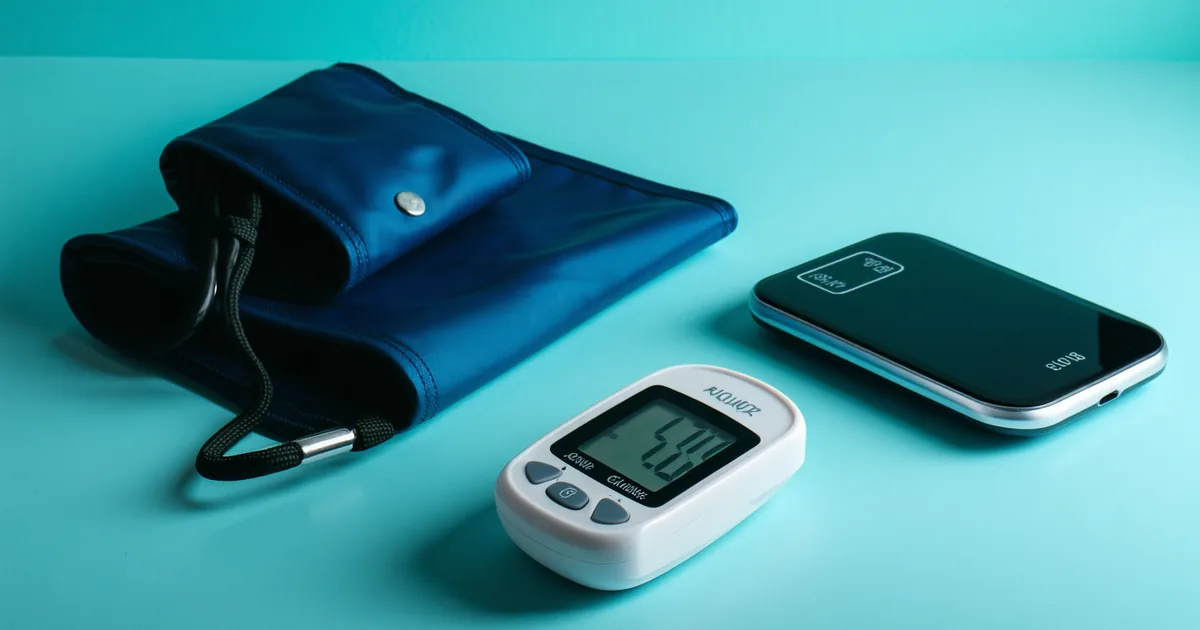
Alert fatigue is the most consistent obstacle to sustainable RPM programs — and it's almost always self-inflicted. When a clinical team configures their monitoring platform using population-level reference ranges (fasting glucose above 200, systolic BP above 160, weight gain above 3 lbs in 24 hours), they create an alert volume that swamps the care coordinator and trains the team to ignore notifications. Within 60 days, the dashboard becomes background noise.
The solution isn't more sophisticated algorithms — it's a clearer framework for what you're actually trying to detect, and for whom. This article covers the clinical logic behind threshold configuration for three device classes, with guidance on how to move from population defaults toward patient-specific baselines.
These thresholds are evidence-informed guidance, not clinical prescriptions. Specific values for individual patients should be set in consultation with the ordering physician and adjusted based on the patient's clinical history, current medications, and treatment goals. Results vary by population and comorbidity burden.
Why Population Defaults Fail
Consider what happens when you configure a glucose alert at "fasting reading above 200 mg/dL" across a panel of 150 enrolled diabetic patients. For a patient whose A1c is 6.8 and who consistently reads 105–125 fasting, a reading of 210 is a genuine signal. For a patient with A1c of 9.4 who routinely reads 180–230, a reading of 210 is noise — it's within their normal range, requires no clinical action, and burns a care coordinator's time for zero clinical value.
Published literature on RPM alert fatigue consistently identifies two root causes: (1) thresholds set to population norms rather than individual patient baselines, and (2) absence of trend velocity weighting — a single outlier reading generates an alert when a sustained directional trend over 72 hours does not. Both are addressable through better configuration logic.
Glucose Alert Thresholds: Absolute Values vs. Trend Velocity
For patients using connected Bluetooth glucose meters in an RPM program, three alert categories are clinically relevant:
Critical hypoglycemia (action required immediately)
Fasting or postprandial reading below 70 mg/dL. This is a population-level threshold that applies regardless of baseline — no patient whose A1c is 8.5 should be routinely reading sub-70, and a reading in this range warrants same-day clinical contact. The alert should generate an immediate outreach obligation in the care coordinator workflow, not just a dashboard flag.
Hyperglycemia — threshold should be personalized
For a patient with recent A1c of 7.2 and a care goal of maintaining fasting glucose below 140: an alert threshold of 160–170 mg/dL is clinically appropriate — it catches meaningful excursions above goal. For a patient with A1c of 10.1 who is in early medication titration and currently reading 230–270: the same threshold generates daily alerts with no actionable clinical implication.
A workable approach for hyperglycemia: set the absolute alert at a fixed clinical ceiling (commonly 300 mg/dL for urgent review) plus a patient-baseline-relative alert at 60–80 mg/dL above the patient's 30-day rolling average fasting reading. The relative threshold catches genuine upward shifts while filtering out readings that are elevated but within the patient's established pattern.
Sustained trend alert (48–72 hour rising trajectory)
Three or more consecutive fasting readings with a rising trajectory, even if no individual reading crosses an absolute threshold. This is the alert pattern most relevant to detecting early decompensation — a patient who goes from a 30-day average of 140 to readings of 155, 168, 181 over three days without dietary explanation is displaying a signal worth investigating, even if none of those readings trigger an absolute alert.
Blood Pressure Alert Configuration
Ambulatory BP monitoring in RPM programs presents different threshold challenges than glucose. BP readings have higher natural variability — orthostatic effects, white-coat response persisting into home readings, time-of-day variation, and measurement technique inconsistencies (cuff position, arm movement, talking during reading) all contribute to single-reading noise.
For this reason, single-reading alerts for BP should be reserved for genuinely severe values. Evidence-informed thresholds commonly used in RPM programs:
- Hypertensive urgency threshold (requires same-day contact): Two consecutive readings with systolic ≥ 180 mmHg or diastolic ≥ 120 mmHg, taken at least 15 minutes apart
- Sustained elevation alert (requires outreach within 24–48 hours): Three or more readings in a 7-day period with systolic ≥ 160 mmHg or diastolic ≥ 100 mmHg — particularly relevant when this represents a change from the patient's recent baseline
- Baseline shift alert: 7-day rolling average systolic more than 15 mmHg above the patient's 30-day baseline, sustained over 5+ days
We're not saying that isolated single-reading elevations don't warrant attention — for a newly diagnosed hypertensive patient, even one reading above 160/100 may prompt a medication review. But for a patient six months into a stable antihypertensive regimen, the meaningful signal is a sustained change in their own trajectory, not whether any individual reading crosses a population norm.
One device-quality consideration worth noting: BP cuff validation matters for clinical reliability. Devices validated per AAMI/ESH 2010 or ISO 81060-2:2013 protocol are appropriate for clinical decision support. Consumer-grade BP cuffs lacking formal validation should not be the basis for clinical threshold alerts without physician awareness of the device's accuracy limitations.
Weight Monitoring for Heart Failure Decompensation
Weight gain is the most sensitive early marker for fluid retention in heart failure patients — and connected scales are among the most valuable RPM devices in the chronic care management toolkit precisely because daily weight monitoring provides a leading indicator of decompensation that precedes dyspnea and edema by 48–96 hours in many patients.
The threshold configuration question for weight alerts hinges on the patient's clinical context:
- Standard post-discharge heart failure protocol: Alert on weight gain of ≥ 2 lbs (approximately 1 kg) in 24 hours or ≥ 5 lbs (approximately 2.3 kg) in 7 days. These thresholds are drawn from ACC/AHA heart failure management guidelines and represent a widely adopted starting point for post-discharge monitoring programs.
- Stable outpatient CHF monitoring: The 2-lb/24-hour threshold generates frequent alerts for patients with dietary sodium variability who are otherwise compensated. A 3-lb/24-hour or 7-day cumulative approach reduces alert volume while maintaining clinical sensitivity for genuine decompensation signals.
- Patients on diuretic titration protocol: For patients where the care plan explicitly includes nurse-directed diuretic escalation based on weight, the threshold configuration should align with the titration protocol. A patient on a "if weight increases 2 lbs, take extra furosemide dose" protocol should have that threshold as an alert, not a silent data point.
To illustrate with a realistic scenario: consider a 74-year-old patient with EF of 35% (NYHA Class III), discharged 10 days earlier following admission for acute decompensated heart failure. On a daily weight monitoring protocol, a care coordinator reviewing the dashboard at day 8 post-discharge observes a trend: baseline weight 178 lbs at discharge, then 178.5, 179.0, 180.2, 181.8 over five consecutive days. No individual reading triggers an absolute threshold alert, but the 3.8-lb 5-day gain warrants a call to the patient and notification of the ordering physician well before the patient reaches the dyspnea threshold that would prompt an ED visit.
Moving Toward Patient-Specific Baselines: Practical Implementation
The theoretical case for personalized thresholds is straightforward. The operational challenge is establishing baselines for newly enrolled patients who haven't generated 30 days of RPM data yet.
A reasonable approach: use population-level defaults (conservative, lower alert volume) for the first 30 days of enrollment while accumulating baseline data. After 30 days of readings, the care team reviews the patient's data profile and adjusts thresholds based on observed patterns, recent lab values (HbA1c, BNP/NT-proBNP for heart failure patients), and clinical goals documented in the care plan.
This initial 30-day period also serves an important secondary purpose: it identifies patients who aren't transmitting data reliably. An enrolled patient who sends fewer than 16 readings in their first month is both a billing risk (missing the 99454 threshold) and a care gap — either the device onboarding failed, the patient lacks motivation, or there's a technical issue. Early identification of non-transmitting patients allows the care team to intervene before the patient disengages entirely.
Threshold configuration is not a one-time setup task. Patients' clinical trajectories change — medication adjustments, seasonal variation in activity, weight loss programs, new diagnoses. The care coordinator and ordering physician should review threshold settings at least quarterly for each enrolled patient, using the accumulated RPM data as a reference. A patient who has controlled their hypertension well for six months may warrant tighter thresholds as the clinical target shifts toward lower BP range; a patient who has achieved an A1c of 7.0 from a baseline of 9.8 may have thresholds that need recalibration to avoid over-alerting on normal-range readings.